The Testaments, the sequel to The Handmaid’s Tale, has arrived on Disney+, expanding the dystopian world of Gilead with a new story set years after the events of the original series. The show debuted on April 8 with its first three episodes and will continue with weekly releases leading up to the season finale on May 27.
Elisabeth Moss reprises her role as June Osborne, appearing from the very first episode. Initially kept under wraps, her return serves as a narrative bridge between the two series, reinforcing continuity within the same universe.
Plot and setting of the sequel
Set approximately fifteen years after The Handmaid’s Tale, The Testaments focuses on a new generation raised within Gilead’s regime. At the center of the story are Agnes, who has grown up inside the system, and Daisy, who comes from the outside world.
The two protagonists meet in a highly controlled environment designed to train future wives. However, their relationship gradually becomes a turning point, leading them to question the rules and values imposed by the regime.
Returning characters and cast
Alongside new characters, the series brings back familiar figures such as Aunt Lydia, once again portrayed by Ann Dowd. Her role remains central in shaping and enforcing Gilead’s rigid system of control.
The cast also includes new faces, with Chase Infiniti playing Agnes and Lucy Halliday as Daisy. In addition, Elisabeth Moss serves as an executive producer, further ensuring continuity with the original series.
From page to screen
The series is based on The Testaments, the 2019 novel by Margaret Atwood and sequel to The Handmaid’s Tale. The book received major recognition, including the Booker Prize, and presents a narrative built on multiple perspectives.
In line with the source material, the television adaptation adopts an ensemble structure and broadens its focus on the inner workings of the regime, while keeping individual experiences at its core.
Unlike its predecessor, which centered on the perspective of the handmaids, The Testaments explores the lives of those raised at the top of Gilead’s social hierarchy. This shift in perspective offers a different angle on the system, highlighting new forms of control and conflict.
Within this framework, the series develops a narrative that weaves together themes of identity, growth, and resistance, balancing personal stories with a wider political context.
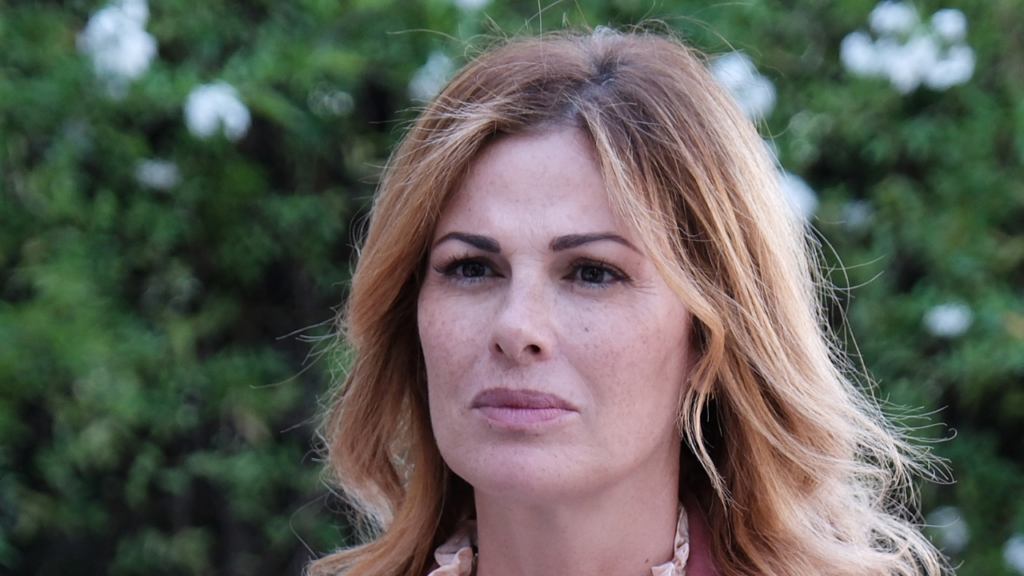
Photo Credits: “Elisabeth Moss” di El Hormiguero, CC BY-NC 2.0